

A great Family Vacation Guide doesn’t happen by accident — it takes the right mix of planning, budgeting, and destination choices that actually work for every age group in your household. This guide walks through everything you need to plan a family vacation from start to finish: picking the right destination, setting a realistic budget, packing smart, and keeping everyone (parents included) happy along the way. Whether you’re planning your first family vacation or your tenth, these tips will help you avoid common mistakes and come home with memories instead of regrets.
Why Planning Matters More for a Family Vacation
A solo trip or a couples getaway can survive a little improvisation. A family vacation usually can’t — not without someone melting down by day two. Kids need routine, teens need some independence, and parents need at least a little downtime. Balancing all of that is what separates a family vacation that everyone remembers fondly from one that becomes a cautionary tale.
The good news is that most family vacation stress comes from a handful of predictable problems: unrealistic itineraries, tight budgets that snap under surprise costs, and packing chaos. Solve those three, and the rest of the trip tends to fall into place.
Choosing the Right Family Vacation Destination
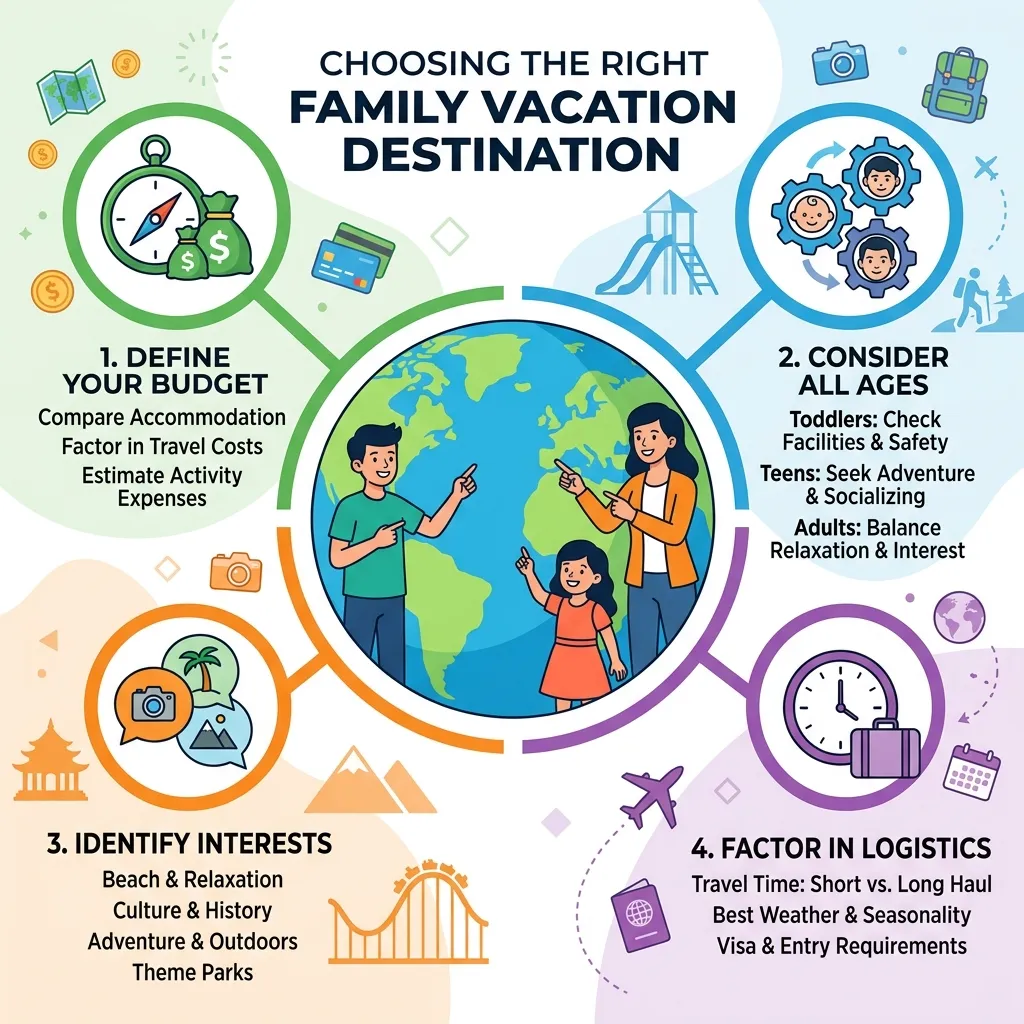
Not every destination works for every family. The right choice depends on your kids’ ages, your budget, and how much structure your family actually wants on vacation.
Best for young kids (0–6): All-inclusive resorts and beach destinations tend to work well, since they minimize the amount of daily logistics parents have to manage. Kids’ clubs and shallow pools also help.
Best for school-age kids (7–12): Theme parks, national parks, and destinations with a mix of structured activities and free time strike a good balance at this age.
Best for teens: Destinations with some independence built in — city trips, adventure travel, or resorts with teen-specific programming — tend to go over better than rigid, parent-led itineraries.
For a broader look at matching destinations to your family’s specific needs, our family vacation guide to planning a trip everyone will enjoy breaks this down in more detail by age group and travel style.
Budgeting for a Family Vacation
Money is the number one source of family vacation stress, mostly because of surprise costs that weren’t part of the original plan — resort fees, add-on activities, or that one souvenir shop every kid wants to visit twice.
Core budget categories to plan for:
- Flights or transportation
- Lodging (including any resort or destination fees)
- Food (a major cost most families underestimate)
- Activities and excursions
- Souvenirs and incidentals
- A buffer of 10–15% for the unexpected
Money-saving strategies:
- Travel during shoulder season instead of peak school holidays when possible
- Book accommodations with a kitchen to cut down on restaurant costs
- Look for family vacation packages that bundle flights, hotels, and activities
- Set a per-day spending cap and communicate it with older kids in advance
If tightening the budget is your main priority, our affordable family vacations money-saving guide is worth reading alongside this one — it goes deep into specific ways to cut costs without cutting the fun.
Picking the Right Accommodation
Where you stay shapes the entire feel of a family vacation. A few things matter more for families than for other types of travelers:
- Space. A single hotel room with two adults and two kids gets old fast. Suites, connecting rooms, or vacation rentals give everyone room to breathe.
- Location. Staying close to your main planned activities cuts down on exhausting daily transit with tired kids.
- Amenities. Pools, kids’ clubs, and on-site laundry can make a multi-day trip significantly easier to manage.
For families weighing resort options specifically, our best family vacation resorts guide compares amenities, price points, and age-range suitability across some of the most popular family-friendly resorts.
Building a Realistic Family Vacation Itinerary
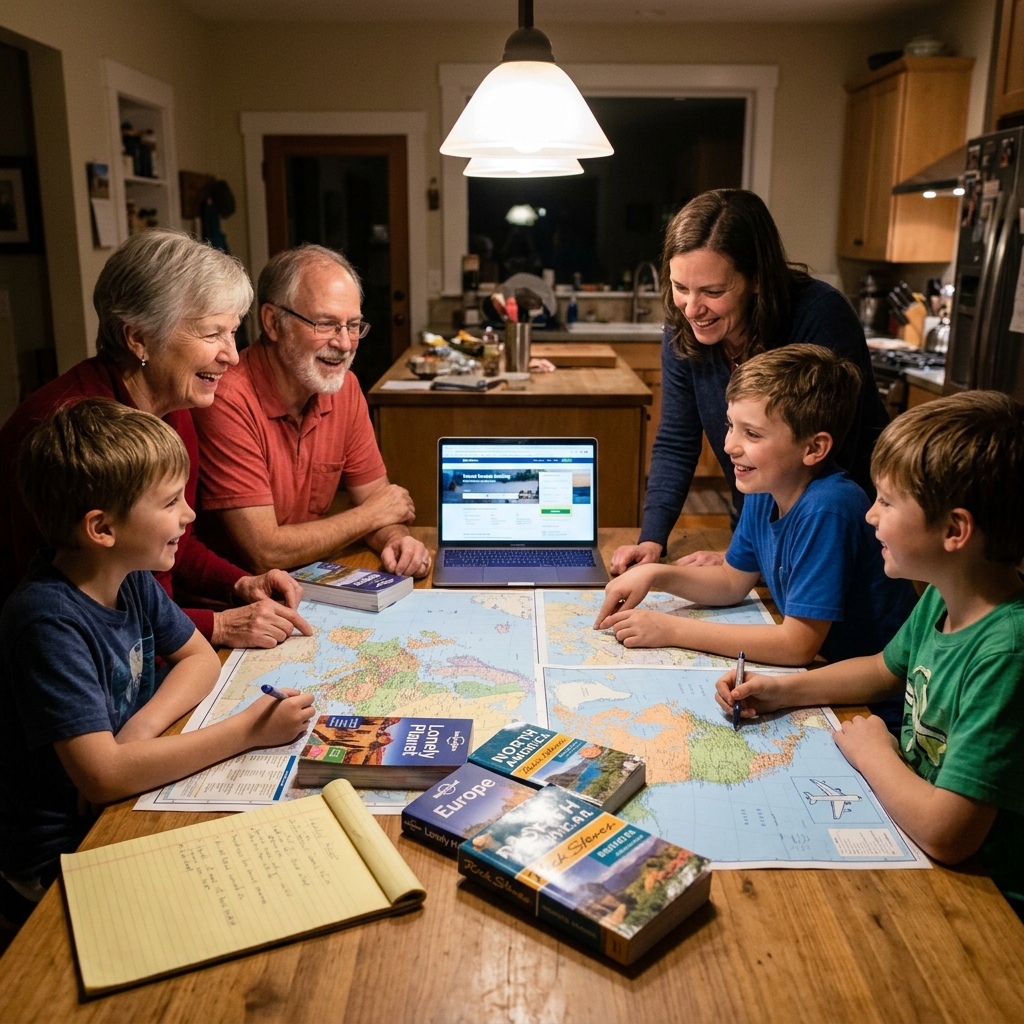
One of the biggest family vacation mistakes is over-scheduling. Parents plan a trip the way they’d plan a solo adventure — packed with activities — and then wonder why everyone is exhausted and irritable by day three.
A more realistic approach:
- Plan one major activity per day, not three
- Build in downtime, especially for naps or pool time with younger kids
- Let each family member pick at least one activity or meal during the trip
- Keep travel days lighter than activity days
- Have a backup indoor plan in case of bad weather
A family vacation itinerary should feel like a loose framework, not a rigid schedule. The families who report the best trips are usually the ones who left room to adjust.
Packing for a Family Vacation Without the Chaos
Packing for one person is simple. Packing for an entire family — with different sizes, needs, and “must-have” comfort items — is where a lot of pre-trip stress comes from.
Smart packing strategies:
- Pack each family member’s clothes in a separate packing cube or bag
- Bring one shared “activity bag” with snacks, wipes, and entertainment for transit
- Pack a basic first-aid kit sized for kids, including any regular medications
- Roll clothes instead of folding to save space in shared luggage
- Pack one comfort item per child (stuffed animal, blanket) in a carry-on, never checked luggage
Managing Screen Time and Downtime
Every family has a different philosophy here, but most family vacations benefit from at least some intentional balance. Total screen bans often backfire on long travel days, while unlimited access can eat into the shared experiences that make the trip worthwhile in the first place.
A middle-ground approach many families use: screens are fine during transit (flights, long car rides), but device-free during meals and planned activities. This keeps kids regulated during the hard parts of travel while still protecting the moments parents actually want to be present for.
Handling the Inevitable Meltdowns
Even the best-planned family vacation will have a rough moment — an overtired toddler, a teenager who wanted to do something else, or a delayed flight that throws off the whole day. Planning for this instead of being surprised by it makes a real difference.
A few things that help in the moment:
- Build extra time into transit days so delays don’t cascade into every other plan
- Keep snacks and water accessible at all times — hunger is behind more meltdowns than people expect
- Have a “reset” activity ready, like a favorite show or game, for moments that need a pause
- Remember that one hard hour doesn’t ruin the whole trip
Best Family Vacation Destinations to Consider
If you’re still narrowing down where to go, a few destination types consistently deliver strong family vacation experiences across different budgets and age groups.
Beach destinations: Coastal spots with calm water and resort infrastructure remain one of the most reliable family vacation choices. Kids get built-in entertainment in the sand and water, while parents get lounge chairs within arm’s reach.
National parks: For families who want more outdoor time and less screen time, national parks offer hiking, wildlife, and a genuine change of pace from everyday routines. They also tend to be more budget-friendly than resort-based trips.
Theme parks: High-energy and activity-packed, theme park vacations work especially well for school-age kids who want nonstop entertainment. The tradeoff is a higher price tag and more physically demanding days.
City trips: Older kids and teens often respond well to city-based family vacations, where museums, food, and some independence (with check-in points) keep everyone engaged without feeling babysat.
Cruises: Cruises solve a lot of family vacation logistics at once — meals, entertainment, and lodging are bundled together, and kids’ clubs give parents built-in breaks without leaving the ship.
For more destination-specific inspiration matched to different family sizes and budgets, our best travel locations for families roundup covers a wider range of options beyond what’s listed here.
Choosing the Right Time of Year for a Family Vacation
Timing has a bigger impact on a family vacation than most people plan for. Traveling during peak school holidays means higher prices, bigger crowds, and less flexibility — but it’s often the only option for families tied to a school calendar.
If your schedule is flexible: Shoulder season travel (just before or after peak season) usually means lower prices, smaller crowds, and more relaxed pacing at popular destinations.
If you’re tied to school breaks: Book as early as possible, since accommodations and flights fill up fastest during these windows. Consider destinations that are less popular during that specific holiday period to avoid the worst of the crowds.
Weather considerations: Always check seasonal weather patterns for your destination — a family vacation during hurricane season or extreme heat can turn a great destination into a stressful one, regardless of how well everything else is planned.
Common Family Vacation Mistakes to Avoid
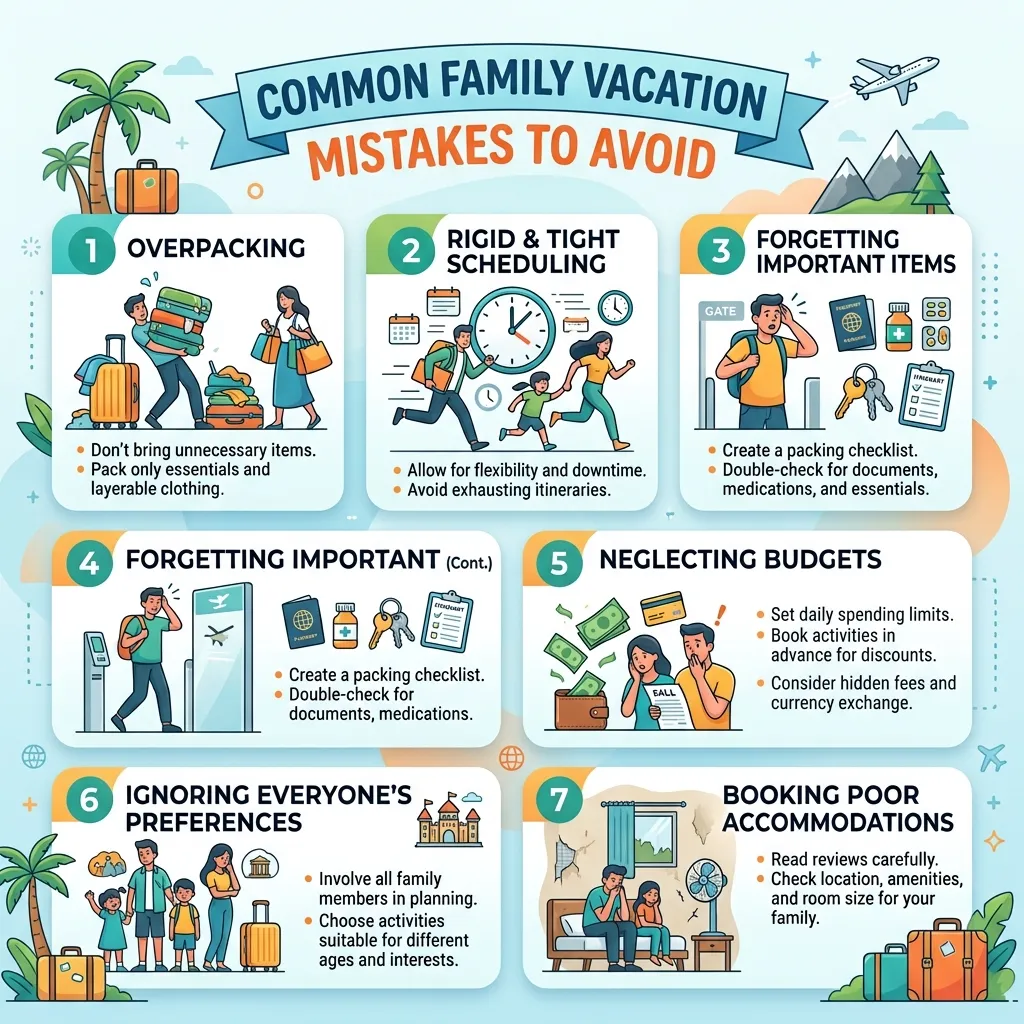
- Overpacking the itinerary. Fewer, well-chosen activities beat a jammed schedule every time.
- Ignoring nap and rest schedules. Skipping downtime for young kids usually costs more time later in meltdowns.
- Underestimating food costs. Family meals add up fast, especially at theme parks and resorts.
- Not involving kids in planning. Letting older kids choose one activity increases buy-in for the whole trip.
- Skipping travel insurance. Family trips have more moving parts, which means more that can go wrong.
Conclusion
A successful family vacation comes down to a few repeatable habits: choosing a destination that fits your kids’ ages, budgeting honestly for the full cost of the trip, packing with a system instead of last-minute chaos, and building an itinerary with enough breathing room for real life to happen. No family vacation goes exactly as planned, but with the right groundwork, the small hiccups become part of the story instead of the whole story. The families who look back on their trips most fondly aren’t the ones whose vacations were perfect — they’re the ones who planned well enough that the imperfect moments didn’t derail everything else. Use this guide as your starting checklist, adjust it to fit your own family’s rhythm and travel style, and revisit it before every trip. Over time, planning a family vacation stops feeling like a project and starts feeling like second nature — and that’s when the actual vacation part finally gets to take over.
Frequently Asked Questions
1. What is the best type of family vacation for young children?
All-inclusive resorts and family-friendly destinations with kids’ clubs, shallow pools, playgrounds, and convenient dining options often work well for young children. These features can make a family vacation easier for parents while keeping children entertained and comfortable.
2. How far in advance should we plan a family vacation?
For popular destinations and peak travel seasons, planning 4–6 months in advance is a good starting point. Early planning gives families more choices for flights, family-friendly accommodations, and activities while making it easier to manage the overall family vacation budget.
3. What’s the average cost of a family vacation?
The cost of a family vacation depends on the destination, travel dates, accommodation, transportation, and family size. For a mid-range trip, budgeting around $200–$400 per day for a family of four can provide a starting estimate, although actual costs can vary significantly.
4. How do we keep a family vacation on budget?
Set a realistic daily spending limit and prioritize the experiences your family values most. Booking accommodations with kitchens, traveling during shoulder season, comparing transportation options, and choosing free or low-cost attractions can help keep a family vacation affordable.
5. What should be in a family vacation packing list?
A useful family vacation packing list should include separate bags for each family member, comfortable clothing, essential medications, toiletries, a kid-friendly first-aid kit, and entertainment for travel days. Each child can also bring one familiar comfort item to make the trip easier.
6. Is it better to plan a structured or flexible family vacation itinerary?
A flexible itinerary with one main activity per day is often better than a tightly scheduled plan. Children may need breaks, naps, or extra time between activities, so leaving some open time can make a family vacation more relaxed and enjoyable for everyone.
7. What destinations work best for a multi-generational family vacation?
All-inclusive resorts, cruises, and larger vacation rentals can work particularly well for multi-generational families. They offer different activities and accommodation options, allowing children, parents, and grandparents to enjoy time together without following the exact same schedule.
8. How do we handle screen time during a family vacation?
Many families allow screen time during flights, long drives, or other transit periods while keeping meals and family activities mostly device-free. Setting simple expectations before the trip can help children understand when screens are available and when the focus should be on shared experiences.
9. What’s the biggest mistake families make when planning a vacation?
Over-scheduling is one of the most common mistakes. Trying to visit too many attractions in a short period can leave parents and children exhausted. A successful family vacation should include enough downtime for rest, spontaneous activities, and unexpected changes.
10. Should we buy travel insurance for a family vacation?
Travel insurance can be useful for family trips because there are more travelers and more potential reasons for plans to change. Depending on the policy, coverage may help with eligible trip cancellations, medical emergencies, delays, or lost baggage, so always review the terms before purchasing.
11. How do we choose between a resort and a vacation rental for a family vacation?
Resorts are convenient because they often provide meals, activities, pools, childcare options, and entertainment in one location. Vacation rentals can offer more space, privacy, and access to a kitchen, which may help families reduce food costs during a longer family vacation.
12. What’s the best way to handle meltdowns during a family vacation?
Build extra time into the itinerary and avoid scheduling too many activities in one day. Keep snacks, water, and familiar comfort items accessible, and have a quiet activity available when a child needs a break. Flexibility can make a family vacation much more enjoyable.








[…] parents who want help organizing the trip from beginning to end, this family vacation guide can also provide useful planning […]