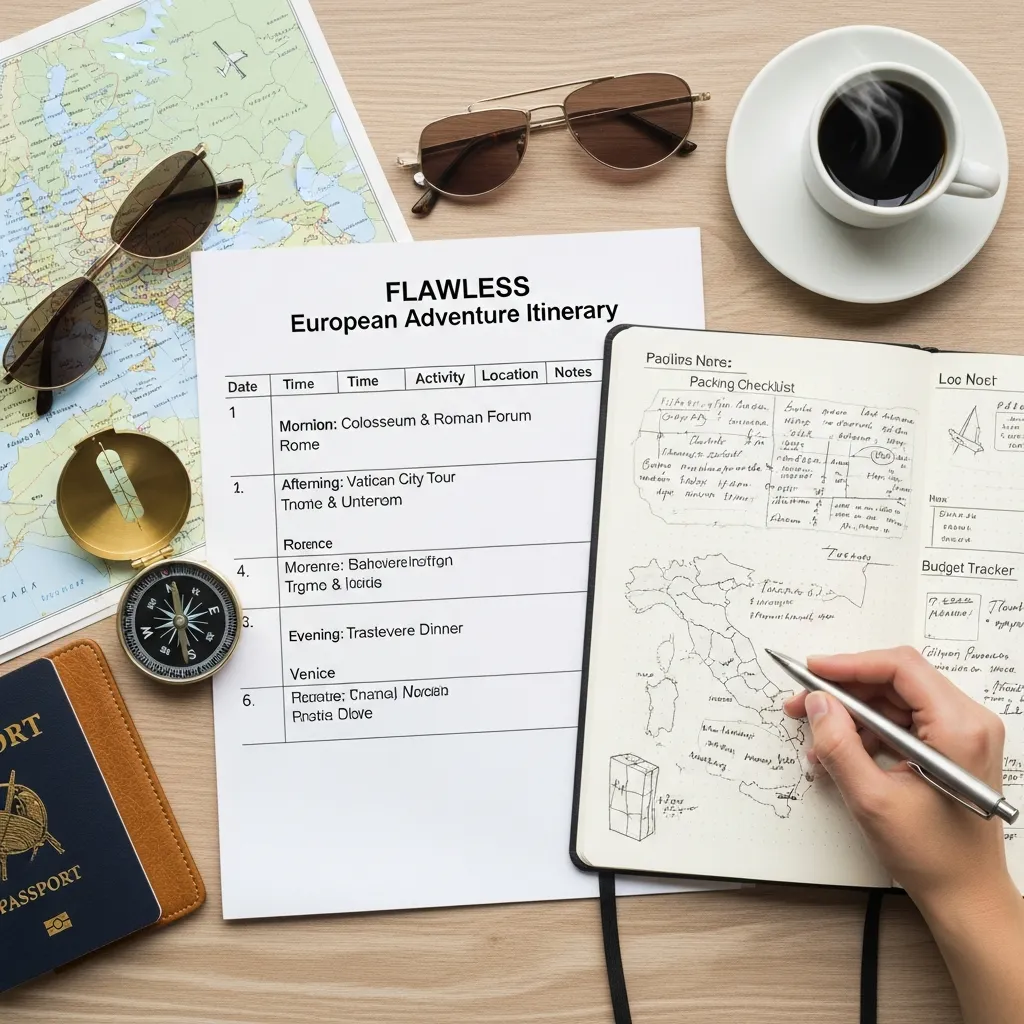
Planning a vacation should be exciting, but the logistics often bring unnecessary stress. Figuring out where to sleep, how to get around, and what to see can quickly overwhelm even the most experienced globetrotters. That is exactly why having a solid travel itinerary example to follow makes a huge difference. By laying out your plans clearly, you take the guesswork out of your trip.
A good travel itinerary example serves as your personal roadmap. It organizes your flights, hotel bookings, and daily activities into one readable document. Having this structure does not mean you lose spontaneity. Instead, it provides a safety net so you can enjoy your trip without constantly worrying about what happens next.
Creating a detailed plan offers massive benefits. You reduce travel anxiety because you know where you need to be and when. You improve efficiency by grouping nearby attractions together, saving hours of transit time. Furthermore, a well-structured travel itinerary example helps you save money. When you book early and track your daily spending, you avoid costly last-minute purchases.
Below, we cover everything you need to know about crafting your own trip plan. From understanding the best Travel Itinerary Format to reviewing Safe Ticket Booking Tips, this guide will help you prepare for a flawless vacation.
Understanding the Travel Itinerary Format
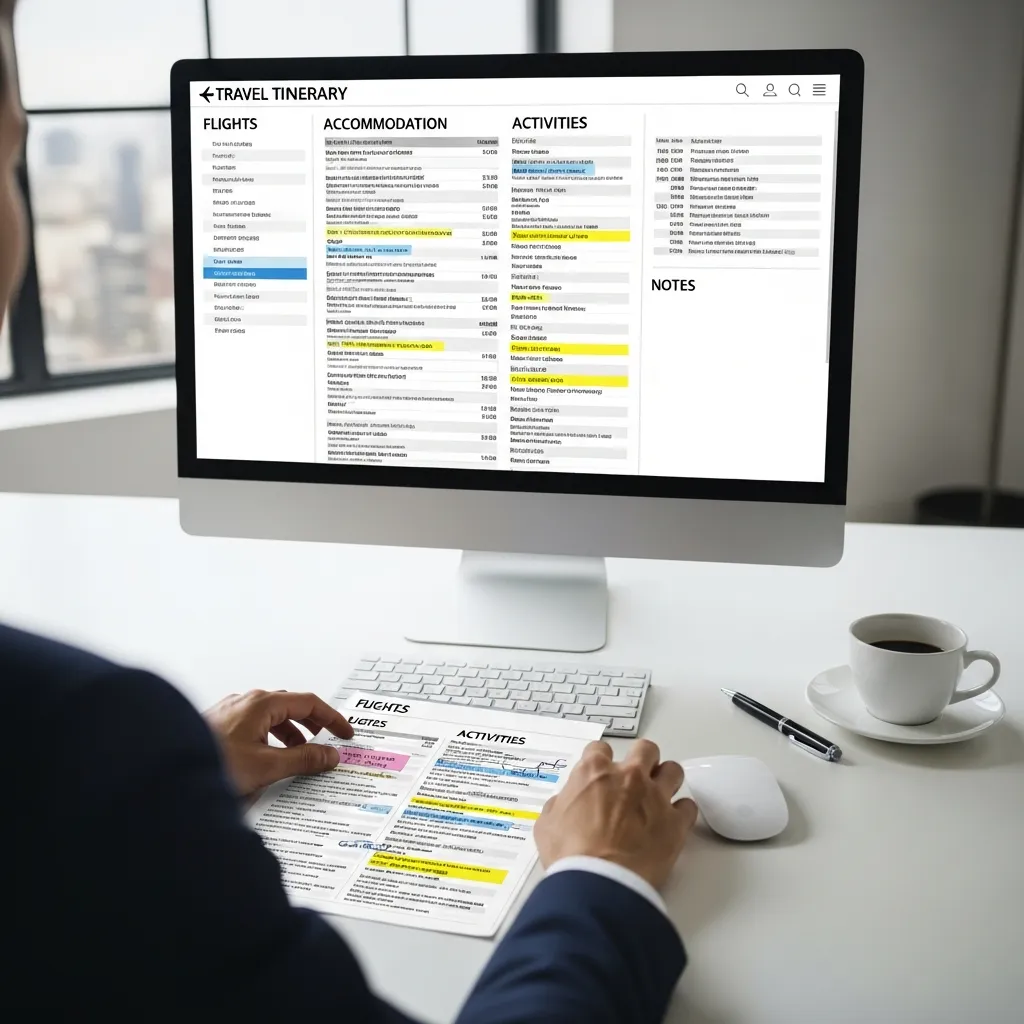
An excellent travel itinerary example relies on a clear and logical structure. If your information is scattered, the document becomes useless during the chaos of a travel day. Choosing the right Travel Itinerary Format ensures you can access crucial details at a glance.
Key components of an effective itinerary
To build a reliable travel itinerary example, you must include several vital components. Missing any of these can lead to confusion during your trip.
Dates and times: Always list the exact dates and times for flights, check-ins, and tours. Make sure to account for time zone changes to avoid missing connections.
Accommodation details: Include the name, address, and phone number of your hotel or rental property. Add your booking confirmation numbers for quick reference.
Transportation: Note how you will get from the airport to your hotel, and how you plan to navigate the city. List train schedules, bus routes, or car rental details.
Activities and attractions: List the places you want to visit. Include opening hours and ticket prices in your travel itinerary example to avoid surprises.
Meals and dining: You do not need to plan every meal, but noting highly-rated restaurants near your planned activities saves you from eating at tourist traps.
Budgeting: Track your estimated daily costs. A thorough travel itinerary example helps you see if you are overspending before the trip even begins.
Contact information: Keep a list of emergency contacts, including the local embassy, your insurance provider, and family members back home.
Different formats: daily, chronological, activity-based
Your Travel Itinerary Format can vary based on your personal preference. A chronological format lists everything in the exact order it happens, hour by hour. A daily format gives a broader overview of what you will accomplish each day. An activity-based format simply lists things to do in specific neighborhoods, allowing you to choose what to do based on your mood. A good travel itinerary example often combines a daily overview with chronological details for travel days.
Step-by-Step Guide to Creating Your Travel Itinerary
Building a travel itinerary example from scratch takes some effort, but breaking it down into phases makes the process highly manageable.
Phase 1: Pre-planning and Research
Before you write anything down, you need to make fundamental decisions about your trip.
Choosing your destination and travel dates: Decide where you want to go and when. Check out peak seasons, shoulder seasons, and off-seasons to see what fits your schedule.
Defining your travel style and budget: Are you backpacking, or looking for luxury? Your budget dictates the entire travel itinerary example.
Researching attractions and activities: Read travel blogs and guidebooks to find the best spots. Pin them on a digital map to see which attractions are close to one another.
Considering local customs and weather: Research the local culture. You may need to pack modest clothing for religious sites. Checking the weather ensures your travel itinerary example remains realistic.
Phase 2: Building the Itinerary
Once you have your research, it is time to start building the actual travel itinerary example.
Structuring your days: Group activities by location. If you visit a museum in the morning, find a lunch spot and an afternoon attraction in the same neighborhood.
Allocating time for travel and transitions: Always add buffer time. Getting from the airport to the hotel often takes longer than expected.
Incorporating free time and flexibility: A common mistake in any travel itinerary example is over-scheduling. Leave room to rest, grab a coffee, or explore a random street.
Using templates and digital tools: Use spreadsheets or travel apps to format your plans. A digital Travel Itinerary Format lets you easily update information on the go.
Phase 3: Finalizing and Refining
The last phase involves polishing your travel itinerary example to ensure it works in the real world.
Reviewing and adjusting: Read through your plan. Make sure you have not scheduled two major tours on the same day, which can cause burnout.
Sharing with travel companions: Send the Travel Itinerary Format to your friends or family. Get their feedback and ensure everyone is happy with the pace.
Creating backup plans: Sometimes it rains, or a museum closes unexpectedly. Add a few indoor backup activities to your travel itinerary example just in case.
Enhancing Your Travel Itinerary Example
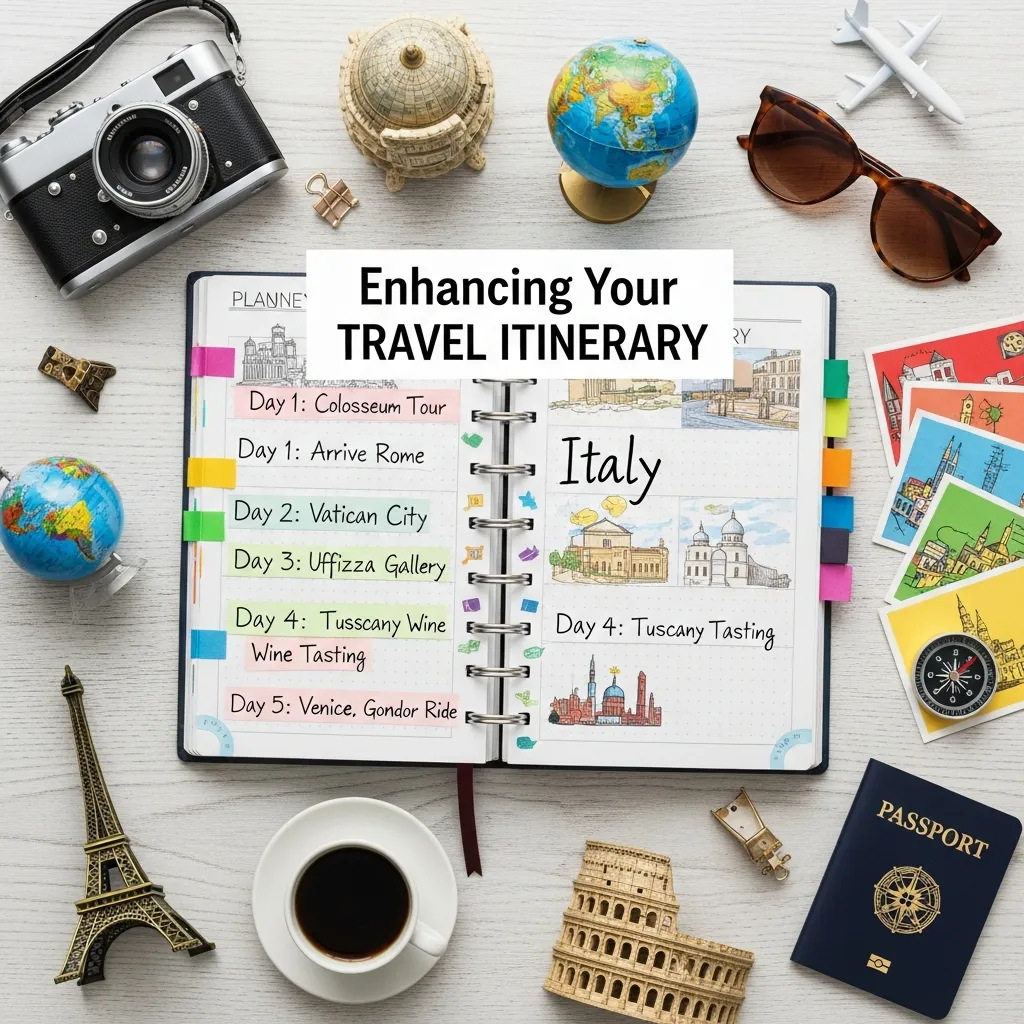
A basic travel itinerary example covers the logistics, but an exceptional one guarantees a memorable experience.
Integrating local experiences
Skip the standard tourist traps and look for authentic local experiences. Add a cooking class, a neighborhood walking tour, or a visit to a local market into your travel itinerary example.
Balancing planned activities with spontaneity
While a travel itinerary example provides structure, you must allow room for the unexpected. Leave one afternoon completely blank. You might discover a hidden park or a fantastic local festival.
Tips for group travel itineraries
When planning for a group, your travel itinerary example needs to accommodate different energy levels. Schedule group dinners, but allow people to split up during the day. This keeps everyone happy and reduces conflict.
Solo travel itinerary considerations
If you are traveling alone, your travel itinerary example should prioritize safety. Note safe neighborhoods and plan to arrive at new destinations during daylight hours.
Safe Ticket Booking Tips
Securing your flights and tours is a major part of the planning process. Following Safe Ticket Booking Tips protects your money and your identity.
Researching reputable booking platforms: Always book directly with airlines or hotels when possible. If you use a third party, ensure they have strong customer reviews.
Understanding fare rules and cancellation policies: Read the fine print. Know if your ticket is refundable before adding it to your travel itinerary example.
Using secure payment methods: Always use a credit card for travel purchases. Credit cards offer better fraud protection than debit cards.
Avoiding common booking scams: If a deal looks too good to be true, it probably is. Beware of fake websites mimicking popular travel brands.
The importance of travel insurance: Never skip travel insurance. It covers medical emergencies, trip cancellations, and lost luggage, acting as the ultimate backup for your travel itinerary example.
Practical Travel Itinerary Example (A 7-Day European Adventure)

To show you how this all comes together, here is a practical travel itinerary example for a week in Europe.
Day 1: Arrival in Paris
Arrive at Charles de Gaulle Airport in the morning. Take the train to your hotel in the Marais district. Spend the afternoon walking along the Seine River to fight off jet lag. Enjoy a casual dinner at a nearby bistro.
Day 2: Parisian Exploration
Start the day early at the Louvre Museum. Book tickets in advance to skip the line (a crucial step in any travel itinerary example). In the afternoon, explore the Montmartre neighborhood and watch the sunset from the Sacré-Cœur Basilica.
Day 3: Train to Rome
Take a morning flight or high-speed train to Rome. Check into your hotel near the Pantheon. Spend the late afternoon tossing a coin into the Trevi Fountain and eating authentic Italian gelato.
Day 4: Ancient Rome
Dedicate the morning to the Colosseum and the Roman Forum. Because this involves heavy walking, keep the afternoon light. Add a relaxing stroll through the Villa Borghese gardens to your travel itinerary example.
Day 5: Vatican City & Roman Delights
Visit the Vatican Museums and St. Peter’s Basilica early in the morning. Have a long, traditional Italian lunch. Spend the evening exploring the Trastevere neighborhood, known for its incredible food scene.
Day 6: Flight to Barcelona
Take a morning flight to Barcelona. After checking into your hotel, head straight to the Gothic Quarter. Get lost in the narrow streets and enjoy tapas for dinner.
Day 7: Barcelona Charm & Departure
Spend your final morning admiring the architecture of the Sagrada Familia. Pick up some souvenirs before heading to the airport for your flight home. This simple travel itinerary example ensures you see the highlights without rushing.
Your Next Steps for Travel Success
A solid travel itinerary example transforms a chaotic trip into a smooth, enjoyable vacation. By organizing your logistics, setting a budget, and leaving room for spontaneous moments, you set yourself up for success. Whether you use a chronological Travel Itinerary Format or a flexible daily list, the key is preparation. Combine these planning strategies with our Safe Ticket Booking Tips, and you are fully equipped for your next journey. Grab a notebook or open a spreadsheet, and start drafting your dream travel itinerary example today.
Frequently Asked Questions (FAQ)
How far in advance should I plan my travel itinerary?
Start drafting your travel itinerary example at least three to six months in advance. This gives you plenty of time to find the best deals on flights and accommodations.
What if I want a flexible travel itinerary?
A travel itinerary example does not have to be rigid. You can use an activity-based Travel Itinerary Format, listing options for each day without locking in specific times.
How do I account for unexpected delays?
Always build buffer time into your travel itinerary example. Leave at least two hours between major transit connections, and do not schedule important tours on travel days.
Can I create a travel itinerary for multiple destinations?
Yes. A multi-city travel itinerary example simply requires careful attention to transit times. Make sure to clearly outline how you get from one city to the next.
What’s the best tool for creating a travel itinerary example?
Many travelers use Google Sheets for a customizable Travel Itinerary Format. Apps like TripIt or Wanderlog are also excellent for keeping all your bookings in one digital space.
Is it necessary to plan every single detail?
No. Over-planning is a common mistake. Your travel itinerary example should outline the major logistics (flights, hotels, big tours) but leave smaller details (like lunch spots) flexible.
How can I save money using a travel itinerary?
By creating a travel itinerary example, you can track daily spending. Planning ahead allows you to apply Safe Ticket Booking Tips and secure early-bird discounts.
What are some common mistakes to avoid in itinerary planning?
Trying to pack too much into one day is a massive mistake. Your travel itinerary example should be realistic, prioritizing a few great experiences over rushing through a dozen.
How do I incorporate rest days into my itinerary?
If your trip is longer than a week, block out a full day in your travel itinerary example where nothing is planned. Use this time to sleep in, do laundry, or relax at a cafe.
What if I’m traveling with children?
When traveling with kids, your travel itinerary example must move at a slower pace. Schedule outdoor park time and keep travel days as simple as possible.
How do I ensure my Travel Itinerary Format is clear for others?
Use bold headings and color-coding. A clean Travel Itinerary Format makes it easy for your travel partners to read and understand the daily plan.
Are there specific Safe Ticket Booking Tips for international travel?
Yes. Always ensure your passport is valid for at least six months beyond your trip dates before booking. Follow Safe Ticket Booking Tips by avoiding unverified third-party flight vendors, and always purchase comprehensive travel insurance.