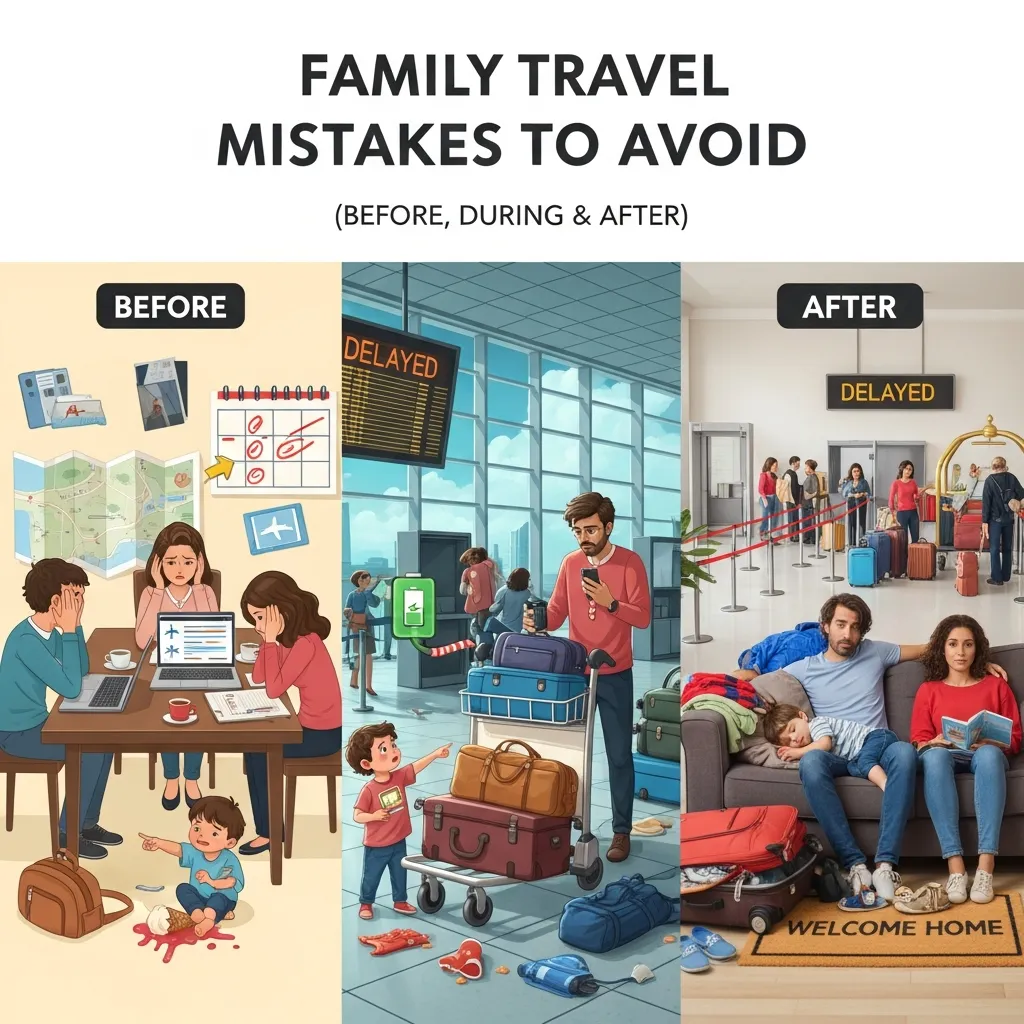
Family travel mistakes—from poor planning and over-scheduling to ignoring safety and dietary needs—can turn a dream vacation into a stressful experience. This guide covers the most common family travel mistakes to avoid across every stage of your trip, with practical strategies to keep your next adventure smooth, safe, and genuinely enjoyable for everyone.
Family vacations hold real promise: shared discoveries, new cultures, and memories that stick around long after the luggage is unpacked. But the gap between a great trip and a chaotic one often comes down to preparation—or the lack of it.
The challenges are real. Coordinating different ages, energy levels, food preferences, and attention spans while navigating airports, unfamiliar cities, and tight budgets is no small feat. A mismanaged itinerary, a forgotten document, or a poor accommodation choice can spiral quickly when you’re hundreds of miles from home with tired kids in tow.
This guide walks through the most significant family travel mistakes to avoid at every stage—before you leave, while you’re on the road, and even after you return. Whether you’re planning a weekend road trip or a two-week international adventure, the insights here will help you travel smarter, stress less, and focus on what actually matters: time together.
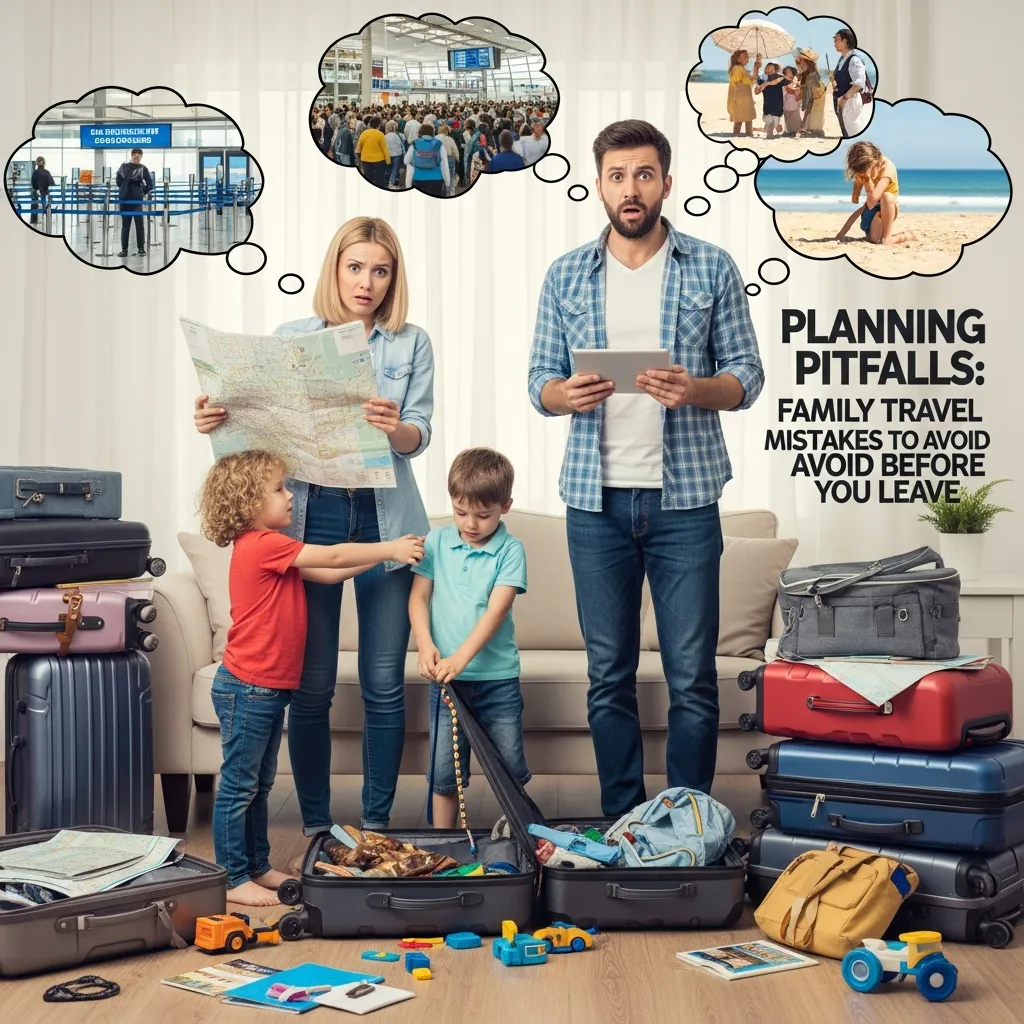
Planning Pitfalls: Family Travel Mistakes to Avoid Before You Leave
Why Should Every Family Member Have a Say in the Planning Process?
One of the most overlooked family travel mistakes is planning the trip entirely around one person’s vision. When children and teens have no input, they’re far less invested in the experience. Give everyone a voice—ask younger kids which activities excite them, let older children research destinations, and consider their interests when building the itinerary. Buy-in starts before the bags are packed.
How Does Overpacking or Underpacking Derail Family Trips?
Overpacking is a classic trap. Families often pack “just in case” items that never leave the suitcase, adding unnecessary weight and stress. On the flip side, underpacking—forgetting critical medications, weather-appropriate clothing, or entertainment for long travel days—creates its own problems. A practical rule: lay out everything you think you need, then remove a third of it. Pack versatile clothing, and plan to do laundry if needed on longer trips.
What Is a Family Travel Budget Planning System and Why Does It Matter?
A Family Travel Budget Planning System is a structured approach to estimating, allocating, and tracking travel expenses across categories—accommodation, transport, food, activities, and emergencies. Without one, families routinely overspend in the first few days and scramble to cut costs toward the end.
Build your system by:
- Listing all anticipated costs before booking anything
- Setting category limits (e.g., 30% accommodation, 20% food, 20% activities)
- Tracking spending in real time using apps like Trail Wallet or TravelSpend
- Including a contingency buffer of at least 10–15% for unexpected expenses
Ignoring budgeting is one of the most consequential family travel mistakes to avoid—financial stress mid-trip affects everyone’s mood and decision-making.
Is Travel Insurance Really Necessary for Family Trips?
Yes—unequivocally. Medical emergencies abroad, trip cancellations, and lost luggage are not hypothetical risks; they happen regularly to families traveling internationally. Travel insurance is especially critical when traveling with young children or elderly relatives, or when visiting destinations with limited medical infrastructure. Review policies carefully for family-specific coverage, including trip interruption, emergency evacuation, and pre-existing condition clauses.
What Are Common Mistakes When Booking Family Accommodations?
Choosing the wrong accommodation is a surprisingly common family travel mistake. A hotel room designed for two adults feels cramped for a family of four. Prioritize:
- Kitchenette or kitchen access to manage meals and dietary needs
- Proximity to family-friendly attractions to reduce transportation time
- Reviews from families, not just couples or solo travelers
- On-site laundry for longer trips
Vacation rentals, family resorts, and apartment hotels often outperform standard hotels for families traveling with children.
On-the-Go Blunders: Family Travel Mistakes to Avoid During Your Trip
Why Is Over-Scheduling One of the Biggest Family Travel Mistakes?
Trying to see everything in one trip is a surefire way to exhaust everyone. Children—especially younger ones—have limited stamina, and overpacked itineraries leave no room for spontaneity or rest. A packed schedule that works beautifully in theory often collapses in practice when someone needs a nap, a meal, or simply a break.
Aim to plan no more than two to three major activities per day. Build in transition time between each, and treat unscheduled time as a feature, not a gap to fill.
How Can Families Balance Sightseeing with Downtime for Children?
The key is alternating high-energy activities with low-key ones. After a busy morning at a museum or landmark, return to your accommodation for a quiet lunch and rest period. Schedule pool time, park visits, or relaxed meals as deliberate downtime—not afterthoughts. Children process new environments better when they have space to decompress, and well-rested kids make for far more enjoyable travel companions.
How Can I Ensure My Family’s Dietary Needs Are Met While Traveling?
Research restaurants, grocery stores, and food markets before arrival—not after you’ve landed hungry. If any family member has allergies, intolerances, or strong dietary preferences, learn the relevant vocabulary in the local language and identify safe dining options in advance. Carrying snacks at all times is non-negotiable with children; hunger strikes fast and derails plans quickly.
What Happens When Families Forget Essential Documents?
Forgotten passports, expired visas, missing immunization records, or lost booking confirmations can bring an entire trip to a standstill. Create a digital folder containing scanned copies of every critical document—passports, travel insurance policies, accommodation confirmations, and health records—and store it in a cloud service accessible offline. Keep physical copies in a separate bag from the originals.
Communication and Expectations: Managing Relationships on the Road
What Causes the Most Tension in Family Travel, and How Can It Be Avoided?
Unrealistic expectations and poor communication. When family members have different visions of what the trip should look like—relaxing versus action-packed, cultural immersion versus beach lounging—conflict is inevitable without a pre-trip conversation to align expectations.
Before you travel, discuss openly:
- What everyone hopes to experience
- How decisions will be made when preferences conflict
- How the family will handle stress, delays, and disappointments
Addressing conflicts calmly and fairly in the moment, rather than letting frustrations build, keeps the trip on track emotionally as well as logistically.
Why Is Ignoring Individual Needs a Family Travel Mistake Worth Taking Seriously?
A teenager forced through a week of toddler-paced activities will be visibly miserable. A young child dragged through adult-oriented museums will be equally checked out. Designing even small portions of each day around individual family members’ interests—a teen’s interest in street art, a child’s love of animals—creates investment and goodwill that benefits the whole group dynamic.
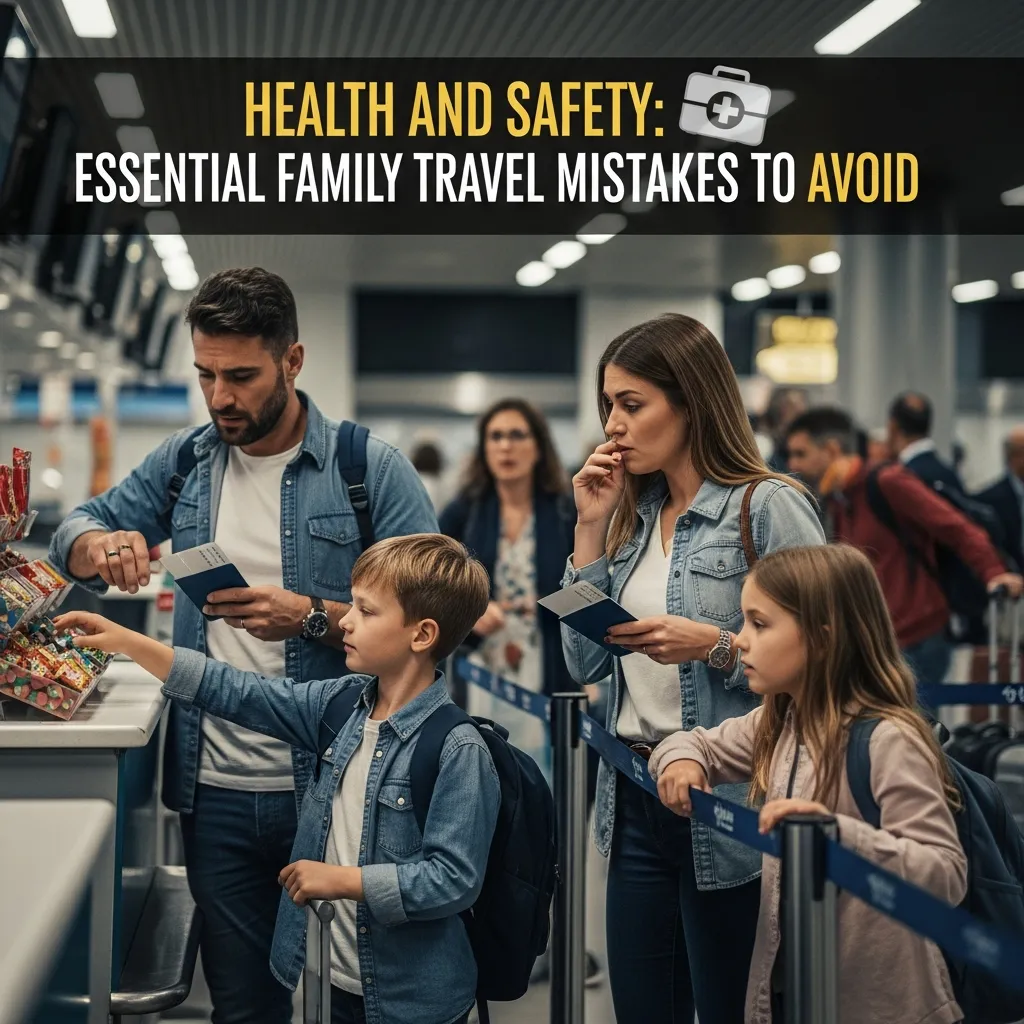
Health and Safety: Essential Family Travel Mistakes to Avoid
What Should Be in a Family Travel Safety Guide?
A solid Family Travel Safety Guide covers both preparation and on-trip protocols. Before departure:
- Visit a travel health clinic at least 4–6 weeks before travel to confirm vaccinations and obtain any necessary prescriptions
- Pack a comprehensive first aid kit including fever reducers, antihistamines, rehydration salts, bandages, and any prescription medications
- Research destination-specific risks: water safety, local diseases, crime patterns, and emergency contact numbers
During the trip, establish clear protocols for what family members should do if separated. Teach younger children their full name, accommodation name, and a parent’s phone number. Consider GPS tracking devices for young children in busy environments.
How Can Families Prevent Sunburn, Dehydration, and Heat Exhaustion While Traveling?
These are among the most preventable health setbacks on family trips, yet families consistently underestimate them—especially in hot climates. Apply broad-spectrum SPF 30+ sunscreen every two hours, ensure children drink water consistently throughout the day (not just when they say they’re thirsty), and schedule outdoor activities in the early morning or late afternoon to avoid peak sun hours.
What Are the Best Strategies to Manage Jet Lag with a Family?
Jet lag hits children harder and faster than adults, and a family operating on disrupted sleep cycles is a family prone to meltdowns. Begin adjusting sleep schedules two to three days before departure by shifting bedtimes and wake times incrementally toward the destination’s time zone. Upon arrival, expose everyone to natural daylight as early as possible, resist the urge to nap for extended periods during the day, and maintain consistent meal times to help the body clock reset.
Technology and Entertainment: Avoiding Modern Family Travel Mistakes
How Does Over-Reliance on Screens Undermine Family Travel?
Screens are a useful short-term tool on long journeys, but defaulting to devices for every dull moment misses opportunities for genuine engagement—with each other and with the destination. Establish screen-free windows, particularly during meals and cultural experiences, and treat device time as intentional rather than automatic.
What Are Some Fun, Screen-Free Entertainment Options for Long Journeys?
Plenty of options hold children’s attention without a screen:
- Travel-sized board games and card games
- Audiobooks and podcasts designed for families
- Travel journals and sketchbooks
- Classic road trip games like 20 questions, I Spy, or storytelling chains
- Activity books tailored to the destination
Pre-loading a mix of digital and non-digital options before departure gives you flexibility based on the child’s mood and the journey length.
Why Do Families Forget Chargers and Adapters—and How Can You Avoid It?
It’s a deceptively small oversight with significant consequences: a dead phone means no navigation, no translation apps, no emergency contacts. Pack a universal travel adapter, a multi-port USB charger, and a portable power bank for each travel day. Keep them in your carry-on rather than checked luggage.
Night-Time Festivals and Family Fun: Making Evening Events Work
What Are the Best Tips for Enjoying Night-Time Festivals with Kids?
Night-Time Festivals offer some of the most unique and memorable family travel experiences—lantern festivals, night markets, outdoor concerts, and cultural celebrations that simply don’t exist in daytime form. To make them work with children:
- Choose age-appropriate events: check whether the festival has activities, performances, or areas specifically designed for children
- Arrive early to secure a safe, visible position before crowds build
- Set a clear departure time before you go, so children know what to expect
- Bring essentials: light layers for cooler evening temperatures, snacks, and a portable blanket for younger children who may fall asleep
What Are the Safety Considerations for Night-Time Festival Activities?
Crowds, low visibility, and unfamiliar environments are the key risk factors at evening events. Dress children in bright or reflective clothing. Designate a clear meeting point in case anyone gets separated, and ensure all family members know it before you enter the venue. Keep younger children close—hand-holding or a safety harness for toddlers is a sound precaution in dense crowds.
Post-Trip Reflections: Learning from Family Travel Mistakes

Why Should Families Document Their Travel Experiences?
Documentation transforms a trip from a fading memory into a lasting resource. Encourage children to keep a simple travel journal—even drawings or ticket stubs count. Take photos intentionally, not just reflexively. These records serve a dual purpose: they preserve memories and, over time, help the family identify what worked, what didn’t, and what they’d prioritize next time.
How Can Families Evaluate What Went Well and What Didn’t?
Within a week of returning, hold an informal family debrief. Ask everyone what their favorite moment was, what they found hardest, and what they’d change. This isn’t about assigning blame for what went wrong—it’s about extracting useful information for future trips. Over time, these debriefs help families travel smarter and more in tune with each other’s needs.
How Can Post-Trip Insights Improve Future Family Adventures?
Every family trip is a data point. The accommodation that felt perfect, the activity everyone wanted to leave early, the budget category that consistently overspent—all of this informs better planning next time. Keep a simple travel notes document and update it after each trip. The families who travel best together are those who learn consistently from their own experiences.
Conclusion
Family travel, done well, is one of the richest investments a family can make. The challenges are real, but nearly all of the most common family travel mistakes to avoid are, with the right preparation, entirely avoidable.
Start with honest planning that involves everyone. Build a Family Travel Budget Planning System that reflects your actual costs. Use a Family Travel Safety Guide as your pre-departure checklist. Give the itinerary room to breathe. And don’t overlook the unique magic of experiences like Night-Time Festivals, which can become the highlights of the entire trip when approached thoughtfully.
Travel with curiosity, patience, and a realistic view of what family adventure actually looks like—messy at times, unpredictable often, and genuinely extraordinary when it comes together.
Frequently Asked Questions
How can I involve my children in family travel planning?
Give children age-appropriate choices: younger kids can pick between two activity options; older children can research destinations, draft itineraries, or manage a small portion of the budget. When children feel ownership over the plan, they’re more engaged and more resilient when things don’t go perfectly.
What are the essential items for a Family Travel Safety Guide?
A Family Travel Safety Guide should include up-to-date vaccination records, a first aid kit with destination-specific supplies, emergency contact numbers (local police, hospital, embassy), copies of all travel documents, a list of family members’ allergies and medications, and a plan for what to do if the group gets separated.
How can I create an effective Family Travel Budget Planning System?
A Family Travel Budget Planning System works best when built before any bookings are made. List every cost category, assign realistic limits, and track spending daily using a budgeting app. Include a 10–15% contingency buffer, and review the budget together as a family to build awareness and accountability.
What are common mistakes when booking family accommodations?
The most common mistakes include booking standard hotel rooms without checking for family-sized options, prioritizing price over location, ignoring reviews from other families, and overlooking practical amenities like kitchenettes, laundry facilities, and proximity to family-friendly activities.
How do I balance sightseeing with downtime for children during a trip?
Limit major activities to two or three per day, and schedule built-in rest periods—especially after mornings in transit or at busy attractions. Treat downtime as a planned part of the itinerary, not dead time. Children who rest adequately engage far better with the experiences that follow.
What are the best strategies to manage jet lag with a family?
Begin adjusting sleep schedules two to three days before departure. On arrival, pursue natural daylight early, keep mealtimes consistent with the new time zone, and avoid extended daytime napping. For very young children, maintaining a flexible but familiar bedtime routine can help ease the transition.
How can I ensure my family’s dietary needs are met while traveling?
Research restaurants and grocery options before arrival. Learn key food allergy phrases in the local language if traveling internationally. Carry snacks at all times, and identify at least two reliable dining options near each day’s planned activities to avoid making decisions when everyone is already hungry and frustrated.
What are some fun, screen-free entertainment options for long journeys?
Travel-sized card and board games, family audiobooks, activity books, travel journals, and classic verbal games all work well. Rotate options throughout a long journey rather than introducing everything at once. Novelty is a powerful tool—save the most engaging items for the most challenging stretches of travel.
Is travel insurance really necessary for family trips?
Yes. Medical emergencies, flight cancellations, and lost luggage are genuine risks that can carry significant financial consequences. Travel insurance is especially important for families traveling internationally, traveling with young children, or visiting destinations where quality medical care may not be readily accessible.
How can we make Night-Time Festivals enjoyable and safe for all ages?
Research the event in advance to confirm it’s child-appropriate. Arrive early, establish a clear meeting point, dress children in bright or reflective clothing, and set a realistic departure time before you go. Bring layers, snacks, and a portable blanket for younger children who may tire before the event ends.
What are the most overlooked safety tips for family travel?
Teaching young children their full name, accommodation name, and a parent’s contact number is frequently overlooked. So is registering with your country’s embassy when traveling internationally, researching local water and food safety, and carrying physical copies of essential documents separately from the originals.
How can I prevent overpacking for a family vacation?
Lay out everything you intend to pack, then deliberately remove one-third. Prioritize versatile clothing that can be mixed and matched, plan to do laundry on longer trips, and ship bulky items like car seats or strollers ahead when possible. Each family member—including older children—should carry their own bag to stay accountable for what they bring.