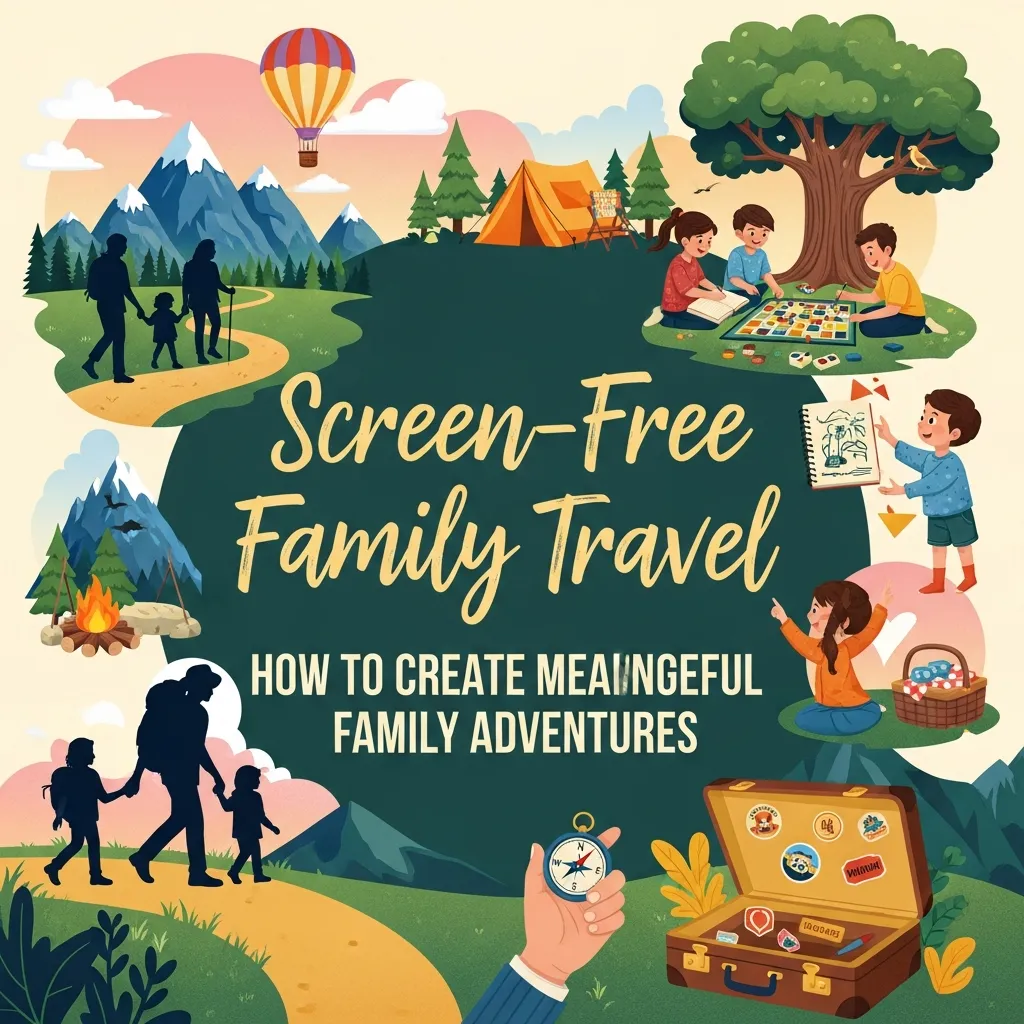
Screen-Free Family Travel helps families reconnect, lower stress, and turn ordinary transit moments into shared memories built on conversation, observation, movement, and presence.
Why this kind of trip matters
Screen-Free Family Travel matters because attention is one of the most valuable things a family can carry. When everyone is staring at a screen, the trip still happens, but much of the emotional value disappears. Screen-Free Family Travel gives that attention back to the people in the vehicle, at the table, on the trail, and in the hotel room.
Screen-Free Family Travel also changes the feeling of the day. Instead of each person retreating into their own digital world, the family begins to notice one another again. A child points out a cloud shape. A parent explains a landmark. Someone laughs at a silly road sign. Those tiny moments are often the ones that make the whole trip feel meaningful.
Another reason Screen-Free Family Travel works is that travel already contains enough novelty to hold attention. New scenery, new food, new sounds, and new routines create a natural sense of curiosity. Families do not need to replace that with endless media. They only need to make room for it.
The psychology behind family connection

Screen-Free Family Travel is powerful because shared attention builds trust. Children often feel more connected when adults are fully listening instead of half-listening while checking a phone. Parents also feel calmer when they are not constantly managing screen requests or negotiating device time. Screen-Free Family Travel gives everyone a little more emotional room.
Screen-Free Family Travel can also reduce overstimulation. Screens are not the enemy, but constant screen switching can make transitions harder. When families are traveling, transitions already happen all day: leaving a hotel, boarding a train, finding food, waiting in lines, and changing plans. Screen-Free Family Travel helps the family move through those transitions with fewer emotional spikes.
Screen-Free Family Travel supports memory in a very simple way. People remember what they notice, and they notice more when they are engaged with the moment. A quiet beach morning, a forest path, a funny detour, or a shared snack can become part of the family story in a way that a device session rarely does.
How to prepare before the trip starts
Screen-Free Family Travel becomes much easier when the family prepares early. Children handle boundaries better when they know the plan before the journey begins. If the trip is explained as a chance to explore, talk, play, and discover, it feels exciting instead of restrictive.
Screen-Free Family Travel works best when parents give the trip a clear identity. That identity can be simple: this is a trip for noticing, for talking, for being outside, or for trying new things together. When children understand the purpose, they are less likely to treat the device boundary like a punishment.
It also helps to pack alternatives in advance. Screen-Free Family Travel should not mean “no screens and no ideas.” A better approach is to replace screens with tools that invite participation: notebooks, small books, travel games, sketch pads, maps, scavenger sheets, or card sets. These items create momentum and reduce boredom before it becomes a problem.
Where families usually struggle
Screen-Free Family Travel gets difficult when the plan assumes everyone will be patient all the time. Long flights, traffic jams, delays, and rainy afternoons can test even the most relaxed family. The key is to anticipate those moments before they happen instead of improvising while everyone is already tired.
Screen-Free Family Travel can also break down when adults are inconsistent. If the rule changes every few hours, children keep testing it. If the boundary stays calm and predictable, most kids adapt faster than parents expect. Screen-Free Family Travel is usually easier when the family speaks with one voice.
Another challenge is that the replacement activities have to be interesting enough. Screen-Free Family Travel should not simply trade screens for boredom. It should trade screens for real engagement. The goal is not silence for its own sake. The goal is a trip that feels fuller and more connected.
Nature makes the switch easier
Screen-Free Family Travel often works especially well outdoors because nature already creates its own entertainment. Trees, water, rocks, birds, trails, clouds, and open sky all invite observation. The setting itself helps the family stay present without needing digital distraction.
Nature-Based Family Vacations are a natural fit for Screen-Free Family Travel because the environment gives children something real to do. They can collect leaves, count birds, follow paths, build sand shapes, look for shells, or simply sit and notice. That kind of travel reduces pressure on parents because the landscape does more of the work.
Screen-Free Family Travel in nature often lowers the emotional noise of the trip. Children are not asking for constant content, and parents are not trying to fight that battle every hour. The day feels less fragmented, and the family begins to settle into a calmer rhythm.
Beach trips without devices
Screen-Free Family Travel can feel especially successful on the coast because beaches are naturally playful. Water, sand, shells, waves, and open space create a long list of things children can do without any screen at all. A beach is one of the easiest places to build a screen-free routine.
Family Beach Vacations are especially strong for Screen-Free Family Travel because the setting already rewards imagination. A child can build, dig, collect, race, search, splash, or simply watch the tide. Adults often discover that the beach becomes easier to enjoy once no one is trying to keep up with a digital schedule.
Screen-Free Family Travel at the beach works best when the day has a light structure. A morning walk, a sand game, a snack break, a shell hunt, and a sunset check-in can fill the day with enough variety. The point is not to fill every second. The point is to let the beach hold the family’s attention naturally.
The role of travel gifts and small tools
Screen-Free Family Travel can be supported by thoughtful items that make the trip more engaging. Travel journals, sticker books, small puzzles, drawing kits, card games, and scavenger activities are all useful because they create interaction without relying on a device.
Gifts for Travelers can be part of this too. A reusable activity folder, a child-friendly backpack, a compact field guide, or a portable art kit can make the trip feel more special while still staying aligned with the screen-free plan. The best gifts are the ones that get used during the trip, not just admired before it.
Screen-Free Family Travel becomes easier when the travel gift is tied to the experience. A gift that helps children notice their surroundings, draw what they see, or keep a travel journal becomes part of the memory instead of a separate object.
A simple daily rhythm helps a lot
Screen-Free Family Travel becomes much easier when the trip has a rhythm. Children usually do better when they know what kinds of moments are coming next. The rhythm does not need to be strict. It only needs to be predictable enough to reduce tension.
A family might start with a morning observation game, move into a mid-morning ride or walk, stop for lunch, spend the afternoon on a hands-on activity, and end the evening with a quick reflection about the day. Screen-Free Family Travel feels more manageable when the family is not trying to invent entertainment from scratch every hour.
| Part of the day | Screen-free idea | Why it works |
|---|---|---|
| Morning | Window watching or nature spotting | Sets a calm tone |
| Midday | Snacks, maps, or games | Bridges transitions |
| Afternoon | Walks or discovery tasks | Keeps energy moving |
| Evening | Memory sharing | Deepens connection |
Screen-Free Family Travel does not need to be complicated. A simple structure often works better than a detailed schedule because it gives children predictability without making the day feel stiff.
How to handle resistance without power struggles
Screen-Free Family Travel usually includes some pushback at first. That is normal. Many children are used to screens as a default option, so a new boundary can feel surprising. The parent’s job is not to eliminate every complaint. The job is to stay calm and consistent.
Screen-Free Family Travel works better when parents offer choices inside the boundary. Instead of asking whether a child wants a screen, ask whether they want to draw, count cars, play a travel game, or help navigate. This gives autonomy without breaking the rule.
It also helps to expect a transition period. Screen-Free Family Travel may feel awkward on the first day, especially if screen use has been frequent at home. Once the family adjusts, the day usually gets easier. Most children do not need endless entertainment. They need a clear rhythm and a steady adult response.
Boredom is not always a bad thing
Screen-Free Family Travel can teach children how to be with boredom without panicking. That matters because boredom often creates the first opening for imagination. A child might start inventing a story, asking questions about the world, or noticing details they would normally miss.
Parents sometimes feel pressure to remove boredom too quickly. Screen-Free Family Travel works best when there is a little space for quiet moments to unfold. Not every pause needs to be filled immediately. Sometimes the best part of the trip begins after the initial silence.
Ages matter, but the idea still works
Screen-Free Family Travel should be shaped around the ages of the children, but the core idea stays the same. Younger children need more sensory play and physical movement. School-age children usually enjoy games, observation tasks, and challenges. Teenagers often prefer independence, responsibility, and creative tasks that feel more grown-up.
For toddlers, Screen-Free Family Travel can include songs, picture books, simple counting, and touch-based activities. For older children, it can include maps, travel notebooks, drawing prompts, bird-spotting, or memory challenges. For teens, it can include route planning, photography tasks, or local discovery assignments.
Screen-Free Family Travel becomes much easier when each age group has a role. Children are more likely to cooperate when they feel included instead of managed.
Why travel becomes more meaningful offline
Screen-Free Family Travel changes the texture of a family trip. Without constant digital interruption, the family begins to share more of the actual experience. Conversations happen more naturally. Small observations get noticed. Even delays become a little more bearable because everyone is still part of the same moment.
Screen-Free Family Travel also gives the family a stronger sense of place. A child who spent the day looking at trees, shells, street signs, or mountain views is more likely to remember the environment later. The trip becomes more than a location. It becomes a shared collection of details.
That kind of travel can also carry into daily life after the vacation ends. Screen-Free Family Travel often leaves families with better habits, because the practice of noticing and connecting does not disappear when the trip is over.
Good destination styles for this approach
Screen-Free Family Travel works especially well in places that naturally invite movement and curiosity. Small towns, countryside stays, national parks, lakeside areas, and walkable historic districts are all strong choices because the setting itself creates opportunities for engagement.
Nature-Based Family Vacations fit this style beautifully because the outdoors gives the family a ready-made activity list. Hikes, rivers, trails, rocks, wildlife, and open air create endless small discoveries. Screen-Free Family Travel becomes easier when the surroundings are already interesting.
Screen-Free Family Travel can also work well in cities when the family chooses a slower pace. Museums, gardens, pedestrian districts, local food spots, and public squares can provide enough variety to keep the day moving without digital entertainment.
How parents benefit too
Screen-Free Family Travel is not just for children. Parents often feel better when they are not constantly negotiating device time. The mental load becomes lighter. The family mood can become calmer. And parents get to spend more of their attention on the trip instead of on screen management.
Screen-Free Family Travel can also reduce guilt. Many parents feel pressure to “keep kids entertained” every minute. A screen-free approach shifts the goal. Instead of trying to entertain constantly, the parent tries to create a good environment for connection. That is a much healthier standard.
Keep the trip realistic, not perfect
Screen-Free Family Travel should never become an all-or-nothing performance. If the family uses a screen once during a long delay, the trip is not ruined. The goal is to reduce dependence, not create a stressful purity test. Families enjoy Screen-Free Family Travel more when they aim for progress instead of perfection.
A realistic trip also gives room for mixed needs. Maybe one child needs more movement, another needs more quiet, and a parent needs a break. Screen-Free Family Travel can still work if the overall pattern stays centered on presence rather than constant digital distraction.
How to create stronger memories
Screen-Free Family Travel often creates more lasting memories because the family is living the trip together instead of splitting attention. Simple rituals can make that memory even stronger. A daily highlight question, a sketchbook page, or a shared “best part of today” conversation can become part of the family tradition.
Screen-Free Family Travel also creates stories more easily. A funny stop, a surprising animal sighting, a shared picnic, or a rainy detour can become family lore. Those stories often matter more than the attractions themselves.
Why the setting matters emotionally
Screen-Free Family Travel is easier when the setting supports the mood you want. A beach trip feels different from a mountain trip. A cabin feels different from a city hotel. The destination should match the energy level you hope the family will have.
Family Beach Vacations are one example of a setting that naturally lowers the pressure to use devices. Nature-Based Family Vacations are another. In both cases, the environment offers enough texture and movement that screens are less necessary.
A small mindset shift makes a big difference
Screen-Free Family Travel is really about what the family chooses to value. It says yes to talking, yes to looking, yes to moving, yes to noticing, yes to connection. The point is not to remove fun. The point is to make the fun more shared and more memorable.
When families see Screen-Free Family Travel as a way to expand the trip rather than restrict it, the whole experience changes. Children are often more capable than adults expect. Once the rhythm is clear, they begin to invent, explore, and enjoy the moment in a more active way.
Practical ideas for a screen-free day

Screen-Free Family Travel works best when parents have a few simple ideas ready before the day starts. A car ride can include a listening game, a letter hunt, or a “who can spot it first” challenge. A train ride can include drawing, map reading, or storytelling. A meal can become a question game or a memory-sharing moment.
The family does not need a huge activity plan. Screen-Free Family Travel often works better with a handful of flexible ideas that can be used anywhere. The goal is to keep everyone engaged without making the day feel scheduled to death.
What to remember before you leave
Screen-Free Family Travel should begin with a clear conversation, a few helpful tools, and realistic expectations. The more the family knows what the trip is trying to be, the easier it is to stay on track. Consistency, not perfection, is what makes the trip feel meaningful.
Screen-Free Family Travel often leads to calmer days, richer conversations, and better memories when the family gives the idea enough room to work. A screen-free trip is not about taking something away. It is about making space for something better.
Conclusion
Screen-Free Family Travel helps families reconnect in a way that feels calm, practical, and memorable. When screens step back, conversation, observation, and shared experience move forward. The trip becomes less about distraction and more about togetherness. Children often adapt more easily than parents expect when the plan is clear and the alternatives are interesting. Parents also benefit because the emotional load of constant device management gets lighter. Screen-Free Family Travel is not about perfection or strict rules; it is about creating a travel style that supports presence, curiosity, and connection. That is what makes the experience feel richer long after the trip ends.
FAQs
1. What is Screen-Free Family Travel?
Screen-Free Family Travel means traveling with less dependence on phones, tablets, and other digital entertainment so the family can focus more on each other and the trip.
2. Is Screen-Free Family Travel realistic for kids?
Yes. Screen-Free Family Travel can work very well for children when the trip includes interesting alternatives, clear boundaries, and a calm routine.
3. Does Screen-Free Family Travel mean zero devices?
Not necessarily. Screen-Free Family Travel usually means reducing screen use significantly, not turning the trip into a rigid all-or-nothing challenge.
4. What kinds of trips work best?
Nature-Based Family Vacations, Family Beach Vacations, and slow, walkable destinations often work especially well for Screen-Free Family Travel.
5. What should I pack instead of screens?
Books, travel journals, drawing supplies, card games, scavenger sheets, and simple travel gifts are all helpful for Screen-Free Family Travel.
6. How do I handle complaints from children?
Stay consistent, offer choices inside the boundary, and keep the tone calm. Screen-Free Family Travel works better when the rule feels steady and positive.
7. Are beach trips good for this idea?
Yes. Family Beach Vacations are often ideal for Screen-Free Family Travel because the setting naturally provides movement, play, and curiosity.
8. Can travel gifts help?
Yes. Gifts for Travelers such as journals, games, and activity kits can support Screen-Free Family Travel by giving children something engaging to do.
9. What if older kids resist?
Give older kids more responsibility, independence, and creative tasks. Screen-Free Family Travel is easier for them when they feel included, not controlled.
10. Why is Screen-Free Family Travel worth trying?
Because Screen-Free Family Travel often creates stronger family connection, calmer days, better attention, and memories that feel more vivid and lasting.